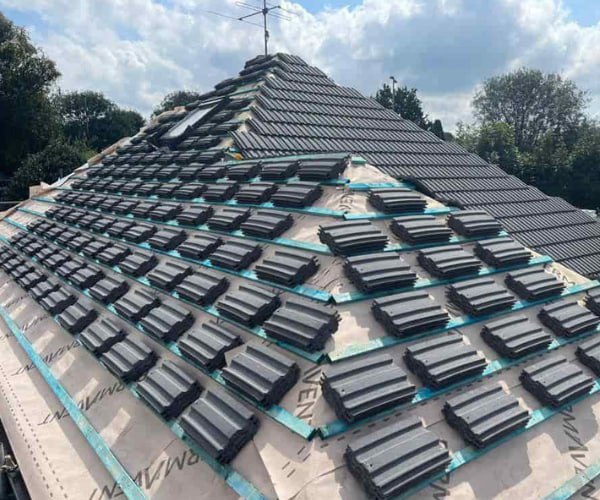
Why Do Roofing Problems Often Get Worse Over Time?
A minor roofing defect may not cause an immediate leak, which can make it tempting to leave the problem until it becomes more noticeable. However, a roof works as a connected system. Tiles, underlay, battens, flashing, fixings and drainage details all depend on one another to keep water outside the property.
When one component is damaged or displaced, continued exposure to rain, wind and changing temperatures can place additional strain on the surrounding materials. What begins as a small, localised issue may therefore affect a much wider area if it is not investigated.
How Minor Roof Defects Develop into Larger Problems
Roofing problems usually worsen through repeated exposure rather than one dramatic event. Understanding this progression explains why early inspection and proportionate repairs are so valuable.
Water Can Travel Beyond the Original Defect
Water does not always appear directly below the point where it entered the roof. It may travel along underlay, rafters, battens or masonry before reaching a ceiling or wall.
As a result, a small opening around a tile, flashing detail or roof junction can affect materials some distance away. The visible damp patch may also appear only after moisture has been entering for some time.
Underlay Is Not a Permanent Substitute for the Roof Covering
If a tile slips or cracks, the underlay beneath it may initially prevent water from reaching the roof space. This can create the impression that the defect is harmless.
Underlay is designed to provide secondary protection, not to remain continually exposed. Repeated moisture, wind movement and sunlight through an opening can weaken it. Once the underlay tears or deteriorates, water has a clearer route into the roof structure.
Damp Battens and Timbers Take Time to Dry
Roofing battens and structural timbers can absorb moisture when water penetrates the covering. If this happens repeatedly, they may remain damp between periods of rain.
Persistent moisture can weaken fixings and affect the condition of the timber. A repair that might initially have involved one tile or a small section of flashing can become more involved if the supporting materials are also damaged.
Loose Tiles Can Disturb Nearby Tiles
A displaced tile changes the way surrounding tiles overlap and support one another. Wind may lift the exposed edges, while movement can damage neighbouring fixings or cause further tiles to slip.
The resulting gap can become progressively larger. This is why even one apparently minor tile defect should be checked rather than simply monitored from the ground.
Small Cracks Can Widen
Roofing materials naturally expand and contract as temperatures change. Existing cracks in tiles, mortar, flashing or flat roof coverings can widen as this movement continues.
Water entering a small crack can also contribute to further deterioration. Once the damaged area loses flexibility or strength, nearby sections may begin to split or separate.
Flashing Defects Can Affect Vulnerable Junctions
Lead flashing and other weathering details protect areas where the roof meets chimneys, walls, valleys and roof penetrations. These junctions handle changes in angle and material, making correct installation particularly important.
If flashing lifts, splits or pulls away from the adjoining surface, water can pass behind it. Continued exposure may then affect masonry, underlay, roof timbers and internal finishes.
Blocked Drainage Keeps Water on the Roof for Longer
Gutters, valleys and outlets are designed to move rainwater away efficiently. Leaves, moss and other debris can restrict this flow, causing water to collect or overflow.
Standing water increases the time moisture remains in contact with roofing materials and joints. On flat roofs, persistent ponding may also place additional pressure on seams and weakened areas.
Temporary Patching May Hide the Underlying Cause
A surface coating or sealant may reduce visible water entry without correcting the defect beneath it. If the real problem is failed flashing, damaged underlay, an unstable tile or deteriorated support, moisture may continue finding another route.
Effective repairs should identify why the failure occurred and restore the relevant roofing detail properly. Treating only the surface symptom can allow hidden deterioration to continue.
Repeated Weather Exposure Tests Weak Areas
A roof defect may appear stable during light rain but fail during prolonged rainfall or strong wind. Different weather conditions direct water onto the roof in different ways.
Each period of exposure can move loose materials, enlarge gaps or drive water further beneath the covering. A weakness that initially affects one small point may eventually compromise a complete junction or section of roof.
Early Warning Signs Should Not Be Ignored
Signs that a roofing problem may be developing include:
- A slipped, cracked or missing tile
- Damp patches on ceilings or walls
- Discolouration in the roof space
- Loose or lifting flashing
- Pieces of mortar or roofing material on the ground
- Gutters overflowing during rainfall
- Daylight visible through an unintended roof opening
- A leak that returns after previous patching
These signs do not always indicate extensive damage, but they justify a professional assessment.
Why Early Professional Inspection Helps
A roofer can examine the visible defect and the surrounding roof to establish whether the problem is isolated. This includes checking the covering, fixings, underlay, battens, flashing and nearby drainage details.
Early investigation usually provides more repair options because the damage may still be confined to its original area. It also reduces the chance of repairing the wrong location when water has travelled before becoming visible.
Conclusion
Roofing problems often worsen because water, wind and temperature changes repeatedly affect an existing weakness. A slipped tile, narrow crack or loose section of flashing can expose the underlay, dampen supporting materials and place additional strain on nearby components.
If you have noticed signs of roof deterioration at your property in Featherstone, West Yorkshire, contact LNM Roofing Featherstone to arrange an inspection. A professional assessment can identify the underlying cause and recommend a suitable repair before the problem spreads further.
Call us on: 01977 802 587
Click here to find out more about LNM Roofing Featherstone
Click here to complete our contact form and see how we can help with your roofing needs.