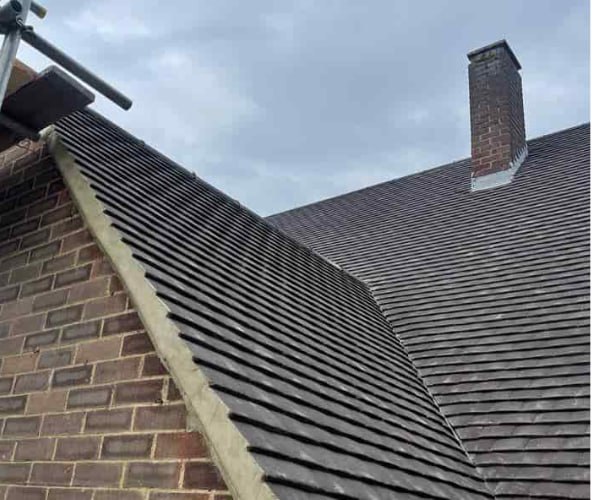
Why the Condition of Your Existing Roof Matters Before Replacement Begins
A roof replacement is an opportunity to restore reliable protection to a property for the long term, but achieving the right result involves more than simply removing the old covering and installing new materials. The condition of the existing roof needs to be properly assessed first. Problems with the roof deck, timbers, underlay, ventilation, drainage, or previous workmanship can influence how replacement work should be approached. At LNM Roofing Featherstone, we provide professional roofing services in Featherstone, West Yorkshire, with careful assessment forming an important part of planning effective roof replacement work.
Understanding what is happening beneath an ageing roof allows problems to be addressed properly rather than simply covering them with new materials.
Why a Pre-Replacement Roof Assessment Matters
The visible roof covering is only one part of a complete roofing system. Tiles or slates may be showing obvious deterioration, but the condition of the supporting components beneath them is equally important.
Before replacement begins, a professional assessment can identify issues such as:
- Deteriorated roofing underlay
- Damaged or weakened battens
- Localised timber problems
- Previous unsuitable repairs
- Poor ventilation
- Water ingress
- Uneven or damaged roof areas
- Defective flashing and junctions
Identifying these issues beforehand allows the replacement to address the condition of the complete roofing system.
Existing Leaks Can Reveal More Than Expected
A recurring roof leak may appear to originate from one damaged tile, but water does not always travel directly downwards from its entry point. It can move along roofing materials and structural components before becoming visible inside the property.
If a roof has experienced repeated water ingress, the underlying areas need to be carefully inspected during replacement.
Simply installing a new covering without understanding the extent of existing deterioration could leave hidden problems unresolved.
The Roof Structure Must Provide Reliable Support
New roofing materials require a suitable and stable structure beneath them.
Once the existing covering is removed, the condition of the supporting roof structure can be assessed more thoroughly. Any deterioration that could affect the new installation should be dealt with before work progresses.
This creates a sound foundation for the replacement roof and helps ensure that the new materials can perform as intended.
Old Underlay Can Hide Significant Deterioration
Roofing underlay provides an important secondary layer of protection beneath tiles or slates.
On older roofs, it can become:
- Brittle
- Torn
- Damaged by prolonged moisture
- Ineffective around penetrations and junctions
A roof replacement provides an opportunity to renew these concealed components rather than focusing only on what can be seen externally.
Previous Repairs Need Careful Inspection
A roof that has been repaired repeatedly over many years may contain different materials, altered details, or sections completed using varying methods.
Before replacement, these areas should be examined carefully.
Understanding previous work allows experienced roofers to identify why certain sections have repeatedly failed and ensure those underlying causes are properly addressed during the new installation.
Flashing and Roof Junctions Require Particular Attention
Some of the most vulnerable areas of a roof occur where different materials and surfaces meet.
These may include:
- Chimney junctions
- Valleys
- Roof abutments
- Ventilation penetrations
- Changes in roof level
If these details have previously allowed moisture to enter, the cause needs to be understood before the replacement roof is completed.
Correctly formed junctions are essential for dependable weather resistance.
Drainage Should Be Considered as Part of the Roof
A roof does not simply need to prevent rainwater from entering the property; it must also direct that water away effectively.
During the assessment, attention should therefore be given to how water travels across the roof and into the associated drainage system.
Persistent areas of moisture or deterioration can sometimes indicate that water has not been moving away from the roof as effectively as it should.
Addressing these details during replacement contributes to better long-term performance.
Ventilation Can Influence Roof Performance
Roof spaces need appropriate ventilation to manage moisture and condensation.
If an existing roof has suffered from poor airflow, simply renewing the external covering may not address the underlying conditions within the roof space.
Assessing ventilation before replacement allows the complete roofing system to be considered rather than treating the project as a purely cosmetic improvement.
A Proper Assessment Helps Determine the Scope of Work
No two ageing roofs deteriorate in exactly the same way.
One property may have a worn external covering with sound supporting components, while another may have deterioration extending beneath the visible surface.
A thorough assessment helps determine exactly what needs attention. This prevents assumptions being made about concealed areas and allows the replacement work to be planned around the actual condition of the property.
Roof Replacement Should Solve Existing Problems
One of the main advantages of replacing an ageing roof is the opportunity to address recurring problems properly.
A well-planned replacement should not simply improve appearance. It should provide a roofing system that deals with existing weaknesses and restores dependable protection.
At LNM Roofing Featherstone, we assess roofs in Featherstone, West Yorkshire, carefully before recommending the appropriate work. Looking at the condition of the complete roof allows us to identify what needs to be addressed and approach replacement with long-term performance in mind.
The Importance of Professional Roof Replacement
Roof replacement involves numerous interconnected components, and the performance of one area can influence another.
Experienced roofers understand how the covering, underlay, battens, structural elements, flashing, ventilation, and drainage need to work together.
Professional assessment and installation help ensure that the finished roof is not simply new on the surface but properly constructed throughout.
Conclusion
The condition of your existing roof matters because a successful replacement starts with understanding why the old roof has deteriorated and what is happening beneath the visible covering. Hidden moisture damage, ageing underlay, weakened components, poor junctions, and previous repairs can all influence the work required.
By assessing the complete roof before replacement begins, existing problems can be identified and addressed as part of a properly planned installation. The result is a new roof designed to provide reliable, long-term protection rather than simply covering over old weaknesses.
If your roof in Featherstone, West Yorkshire, is showing signs of widespread deterioration, LNM Roofing Featherstone can carry out a professional assessment and advise on the most appropriate next steps. Contact our team to discuss your roofing requirements and arrange for your property to be inspected.
Call us on: 01977 802 587
Click here to find out more about LNM Roofing Featherstone
Click here to complete our contact form and see how we can help with your roofing needs.